BOJ's Ueda cites upside risks to inflation
The governor said wage increases were consistent with 2% inflation, but that rate of price growth was not yet established as a social norm in Japan.

The Tax Justice Network estimates that corporate profit shifting costs EU countries €59.3 billion annually, with France and Germany facing the largest losses.
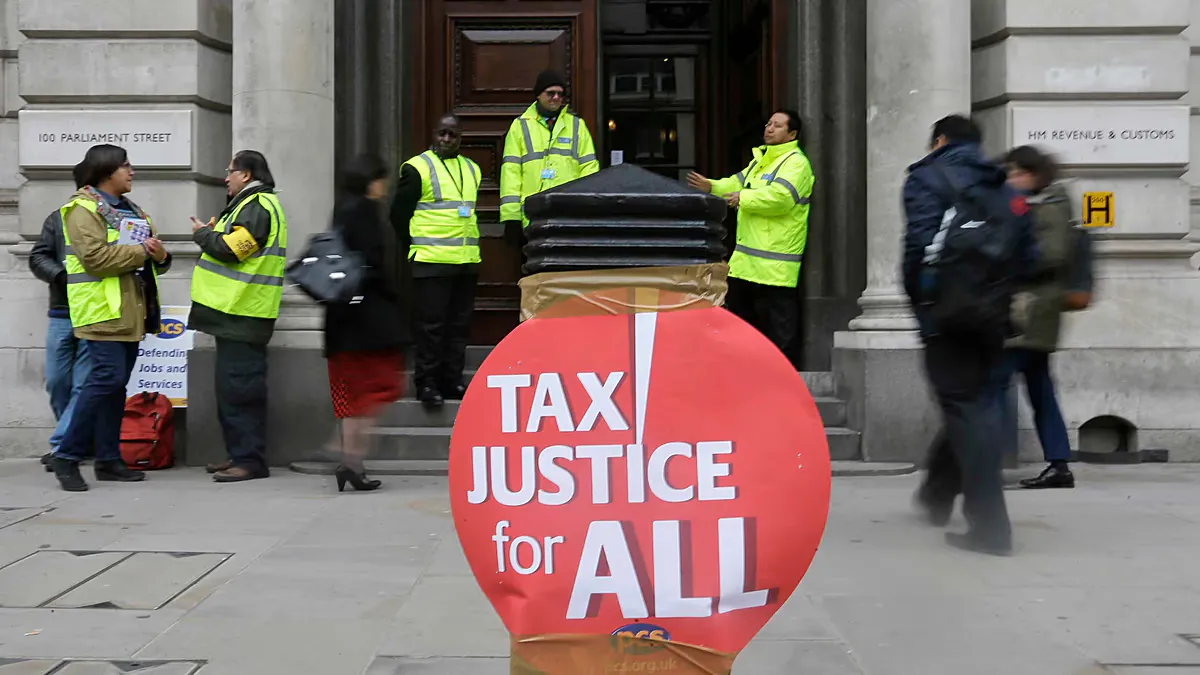
Corporate profit shifting linked to the UK, its Overseas Territories and Crown Dependencies costs EU governments about €8 billion annually, the Tax Justice Network estimates. That represents 13.6% of the bloc’s estimated €59.3 billion in yearly revenue losses from multinational companies moving profits across borders.
The organization published the findings alongside its November 5 Corporate Tax Haven Index update. Its country estimates use 2022 data and concern multinational businesses, not individuals. Profit shifting involves booking earnings in jurisdictions with lower taxes rather than where business activity occurs.
France had the largest estimated overall loss at €13.1 billion, followed by Germany with €11.8 billion. Their combined €24.9 billion represented 42% of the EU total. Spain’s estimated loss was €4.8 billion, Poland’s €4.7 billion and Belgium’s €4.1 billion.
The UK-linked network accounted for an estimated €2.8 billion of France’s losses, or 21.3%, the highest proportion among EU members. Germany’s corresponding loss was €1.4 billion, representing 11.9%, the organization said.
The index assesses how jurisdictions’ tax systems and financial activity may help multinationals lower taxes elsewhere. It assigns 33.3% of the global corporate tax abuse risk it measures to the UK and its associated jurisdictions. The British Virgin Islands ranked first, followed by the Cayman Islands and Bermuda.
Cayman Finance, an industry representative, said investment flows through the Cayman Islands reflect its international fund-center role and do not alone demonstrate tax avoidance. It cited reforms to tax-information sharing and ownership records. The territory was absent from the EU’s October 2026 tax non-cooperation list.
Crown Dependencies determine their own tax rules, while Overseas Territories generally decide tax policy locally. The UK retains intervention powers in the territories but seldom legislates on domestic matters.