Turkic leaders back closer transport links between Asia and Europe
Kazakhstan reported 30% freight growth on the Middle Corridor, while Uzbekistan proposed a program of 100 investment and industrial projects.

Delegates in Azerbaijan focused on implementing a treaty designed to speed cross-border investigations and the return of stolen funds.
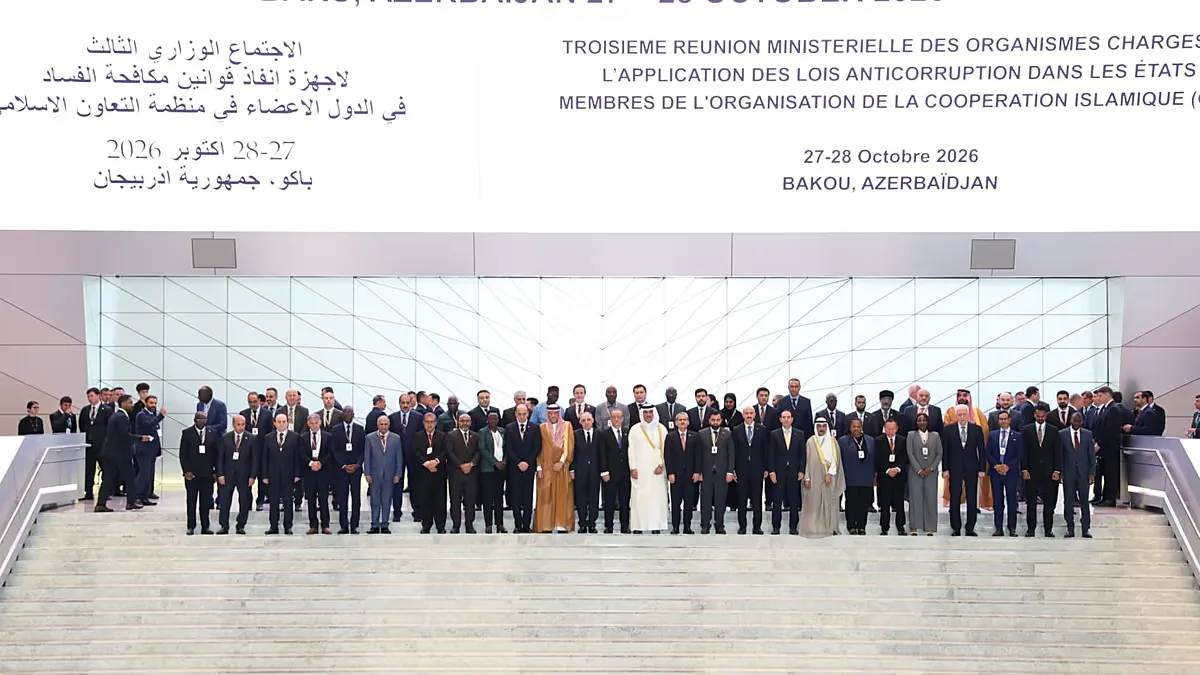
Anti-corruption officials from Organisation of Islamic Cooperation (OIC) countries met in Azerbaijan to advance cooperation on financial investigations and asset recovery, with implementation of the Makkah al-Mukarramah Convention central to their discussions.
Tugay Rahimli, Special Assistant to the Prosecutor General of Azerbaijan, said the gathering drew more than 250 participants, including representatives of eight international organizations. He said Azerbaijan was elected to lead the meeting’s bureau for two years.
The OIC describes the convention as its first multilateral agreement specifically addressing anti-corruption law enforcement among member states. Adopted in 2022, it is intended to reduce reliance on lengthy diplomatic procedures and help agencies exchange intelligence, investigate jointly and return assets obtained through corruption.
Azerbaijan’s Prosecutor General Kamran Aliyev said the country had incorporated into domestic legislation all provisions of the international and regional anti-corruption conventions it had joined.
Malaysia’s experience recovering assets linked to 1Malaysia Development Berhad illustrated the obstacles facing investigators. Abd Halim Bin Aman, Chief Commissioner of the Malaysian Anti-Corruption Commission, said about 33 billion Malaysian ringgit had been recovered. He identified bureaucracy as a persistent impediment and said exchanging legal expertise could help accelerate investigations.
Imed Hazgui, President of Tunisia’s High Authority for Administrative and Financial Control, urged greater sharing of technology and investigative practices. He said terrorist and organized crime groups increasingly use advanced technology to conceal resources and evade sanctions, and called for wider use of artificial intelligence against corruption.