OpenAI rolls out interactive ChatGPT interface alongside GPT-6
The Intelligent UI feature adds calculators, charts and other interactive visuals, with controls allowing users to reduce their frequency.

Meta, Google DeepMind and Isomorphic Labs are contributing $300 million jointly, while commercial funders will receive access to data before its public release.
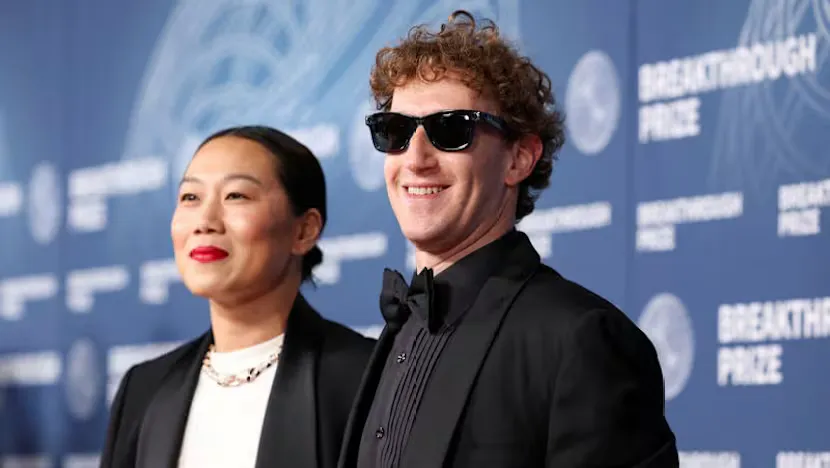
Biohub said on October 7 that investment in its effort to generate biological data for AI research has reached $1.8 billion following commitments from U.S. government agencies and technology companies. Its Virtual Biology Initiative seeks to develop predictive models that could reduce the time needed to develop drugs.
Meta Platforms, Google DeepMind and Isomorphic Labs, a drug discovery startup, are providing a combined $300 million. The Department of Energy plans to invest more than $500 million over five years, supporting laboratory measurements alongside modeling and computation.
The National Institutes of Health will organize datasets and repositories created using earlier federal funding of more than $500 million. Biohub will make those resources consistent for use in AI training. The nonprofit committed $500 million in April and is a philanthropic venture established by Meta CEO Mark Zuckerberg and his wife, Dr. Priscilla Chan.
Public access to the datasets will follow an initial period reserved for commercial backers, said Alex Rives, Biohub's head of science. He said parallel work financed by the government would have no such limits. Pharmaceutical companies and philanthropies are the next potential supporters Biohub plans to approach.
Researchers will collect measurements of cell behavior across a broader variety of conditions. Their tools include screens monitoring cellular reactions to environmental changes and spatial transcriptomics, a method for mapping molecular activity within intact tissue.
Rives said available datasets encompass hundreds of millions of cells, but accurate prediction would require billions and eventually trillions. He said the partners intend to fit decades of work into five years, producing their first dataset in about a year. He also expects accurate predictive models within five years.