Battery storage undercuts gas turbines across 43 markets, Wood Mackenzie says
The consultancy found four-hour batteries cheaper than open-cycle gas turbines, while solar ranked as the least expensive source of new power.

The Philippines plans a national oil reserve by the end of 2027, while ASEAN countries have advanced a preliminary agreement on a regional electricity grid.
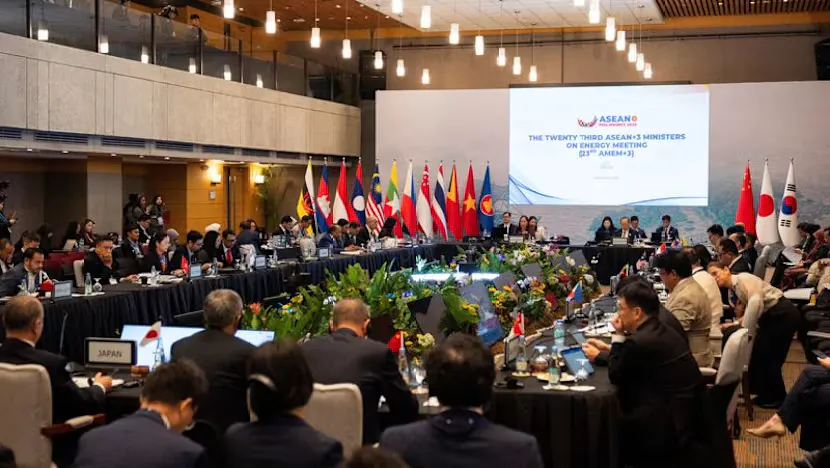
Asian countries are seeking larger oil reserves, more renewable energy and faster development of a regional electricity network in response to supply risks exposed by the Iran war. Japan agreed with Asian partners on plans to expand crude reserves following an Asia Zero Emission Community meeting, Japanese trade state minister Takagi Kei said on October 8.
A joint statement from nine Southeast Asian countries, Japan and Australia identified national storage systems and voluntary shared reserves as the most advanced areas of cooperation. Takagi said Saudi Arabia and the United Arab Emirates had also indicated they were willing to help expand Asia’s oil storage capacity.
Philippine Energy Secretary Sharon Garin said the country would establish a national reserve by the end of 2027, with the possibility of turning it into a regional stockpile later. Countries would choose whether to host shared reserves and set their own sale terms. Garin said the Philippines wanted priority access during emergencies to petroleum stored there by other countries.
ASEAN members also pledged renewable-energy shares of 30% for total primary energy supply and 45% for installed power capacity. The ninth ASEAN energy outlook put renewables at 14.1% of primary energy, below the 2025 goal of 25%. Green power has accounted for 33.7% of capacity since 2020, against a 2025 goal of 35%.
The countries strengthened a preliminary agreement for the regional power grid, a concept announced in December 1997. Garin said a study envisaging connections by 2045 was being reviewed to accelerate implementation.