Trump AI advisers discuss cyberattack reporting and legal protections
The task force also reviewed work on national standards for AI developers to disclose safety incidents and exchange cybersecurity information.

The upper stage reached orbit and deployed 26 Starlink satellites, while SpaceX planned its first attempt to catch the returning spacecraft at its Texas launch tower.
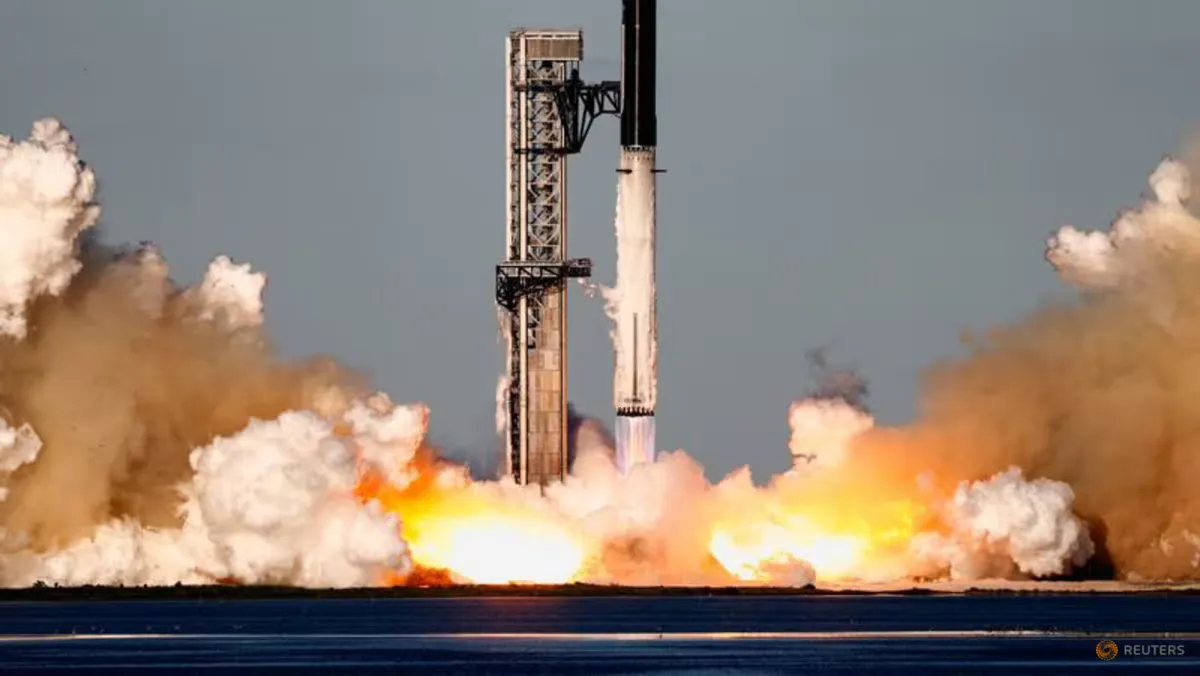
SpaceX sent Starship on its 15th test flight on November 13 from Starbase in South Texas, aiming to return the upper stage to its launch tower after an orbital mission. The Super Heavy booster exploded above the Gulf of Mexico after being diverted from its planned recovery route.
The upper stage entered orbit about 27 minutes after liftoff, SpaceX said. The company also said it deployed all 26 operational Starlink satellites during the mission's first two hours, making this the second Starship flight to deliver working satellites to orbit.
The recovery plan calls for the uncrewed upper stage to spend roughly 22 hours in orbit and complete 14 circuits of Earth before returning to Texas. It would use its engines to descend toward mechanical arms on the launch tower, which would catch the hovering vehicle.
A successful recovery would be the first orbital round trip by a vertically launched spacecraft ending at its exact departure point. The test is part of founder Elon Musk's effort to lower spaceflight costs through a fully reusable rocket system.
The cause of the booster recovery failure was not immediately clear. SpaceX has previously caught Super Heavy with the tower system on three test flights, most recently in March 2025.
NASA has contributed roughly $3.2 billion to Starship development since choosing it in 2021 as an astronaut lunar lander for Artemis. SpaceX has invested at least $15 billion of its own money. Both expect a crewed lunar landing by 2028, although major tests, including orbital fuel transfers, remain unfinished.