Japan's core inflation rises to 2.2% in October
The reading remained above the Bank of Japan's 2% target, while a measure excluding both fresh food and fuel slowed.

The roadmap aims to create around 50,000 jobs and supply 40% of military and security equipment needs through domestic manufacturing.
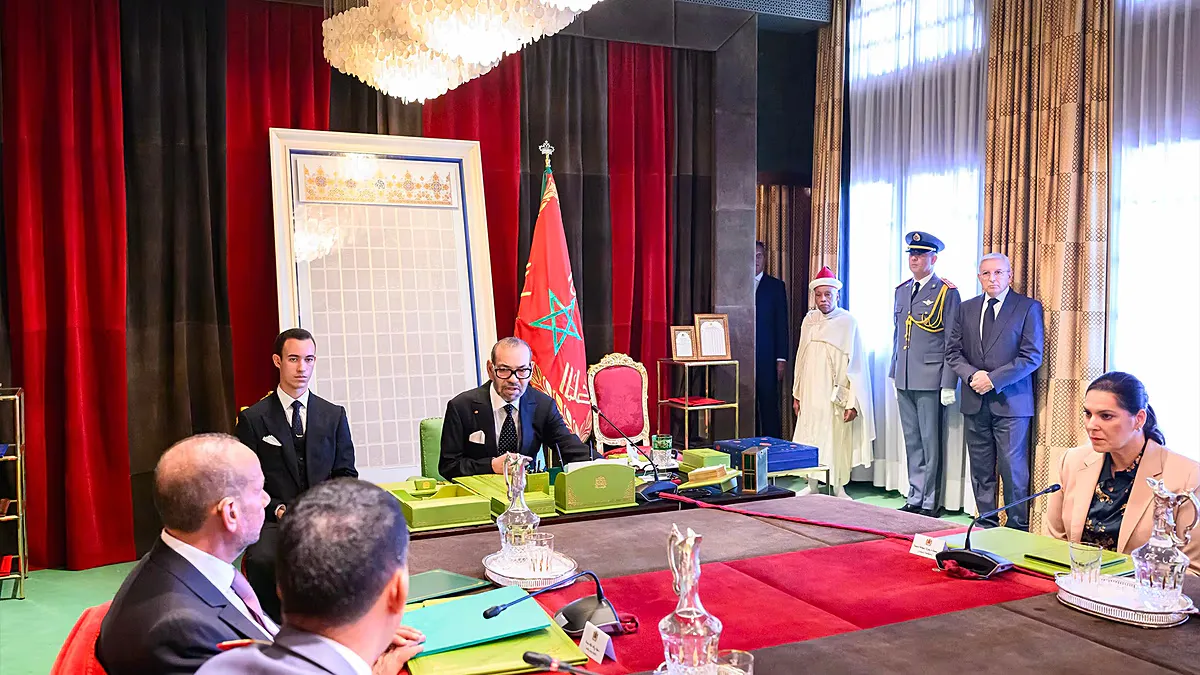
King Mohammed VI has earmarked 4 billion dirhams (€366 million) to develop Morocco's defense manufacturing sector under a roadmap targeting 2035, the Moroccan Royal Cabinet announced. The money will come from the Hassan II Fund for Economic and Social Development.
The plan's goals include around 50,000 jobs, counting direct and indirect employment, and domestic production to cover 40% of equipment requirements for the Royal Armed Forces and security services. It also targets exports accounting for more than 65% of defense industry revenue.
A new strategic agency will oversee policy implementation and assist investors, while an industrial holding company will coordinate production and attract public and private capital. Defense manufacturing zones are planned for Ben Guerir and Benslimane, supplementing those already in Nouaceur and Sidi Yahya.
Morocco intends to draw on its automotive, aviation and electronics industries. Priorities range from drones, autonomous systems and land and naval equipment to defense electronics, cybersecurity and artificial intelligence. Technologies serving civilian as well as military purposes are also included.
Foreign partnerships include cooperation with India's Tata Advanced Systems to produce WhAP 8×8 armored vehicles in Berrechid, with the aim of gradually increasing local component content. Moroccan manufacturer MMI already produces military turrets and remotely controlled weapons systems.
At the Marrakech Air Show in October, Emirati defense group EDGE signed agreements with Morocco's National Defence Administration. One explores local production of small arms and aircraft engines; the other covers Desert Sting 16 and Thunder P-31 guided munitions for the Royal Moroccan Air Force's unmanned combat aircraft.
The king also ordered a specialized academy offering advanced training with industrial partners, alongside a program to attract young workers and align vocational education with the sector's engineering, electronics and digital needs.