Dollar gains as investors retreat from riskier currencies
The dollar index rose 0.1% to 103.88, while the Australian dollar, sterling and bitcoin declined.

Japan and South Korea led regional losses despite Anthropic's strong debut, while the dollar held near its highest level since April 2025.
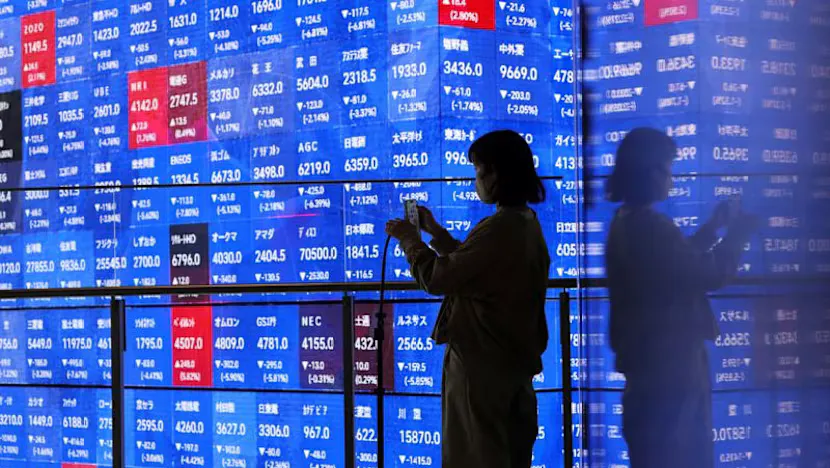
Asian equities fell on November 20, putting MSCI's broad Asia-Pacific share index on course for its weakest week since March 2020. The index dropped 2.5%, taking its weekly decline to 7% and leaving it headed for a sixth consecutive session of losses.
Japan's Nikkei lost 4.1%, with its weekly decline on track to reach 6.8%. South Korea's KOSPI fell 4.7% and was heading for a 7.5% weekly loss. The retreat followed declines exceeding 2% in both the S&P 500 and Nasdaq Composite.
Anthropic shares gained more than 30% in their stock market debut, but that strength did not spread across equities. Kyle Rodda, senior financial market analyst at Capital.com, said the IPO had not eased broader concerns about AI investments and the equity outlook.
U.S. equity futures also weakened during Asian trading, with S&P 500 contracts down 0.4% and Nasdaq contracts losing 0.7%.
The dollar index was little changed at 103.86 after reaching its highest point since April 2025 during the week. Safe-haven demand and expectations of a more hawkish Federal Reserve supported the currency. CME Group's FedWatch tool showed futures pricing a quarter-point rate increase in December as virtually certain.
U.S. government bonds attracted investors amid the equity selloff. The benchmark 10-year Treasury yield was steady at 5.026%, close to a one-week low, while the two-year yield reached 4.749%, against 4.779% at the U.S. close.
Brent crude futures settled unchanged at $91.98 a barrel and were heading for a third consecutive weekly decline. Gold fell 0.6% to $3,601.40 an ounce, putting it on course for a weekly drop of 7.3%.