Nasdaq 100 drops 3.5% as Intel and Reddit lose 29%
The Nasdaq composite had its worst month since March 2025, while concerns over artificial intelligence spending weighed on major technology companies.

Apple, AMD and Palantir earnings are due after Intel's nearly 29% slide on Friday. US stock futures rose despite the decline in Asian shares.
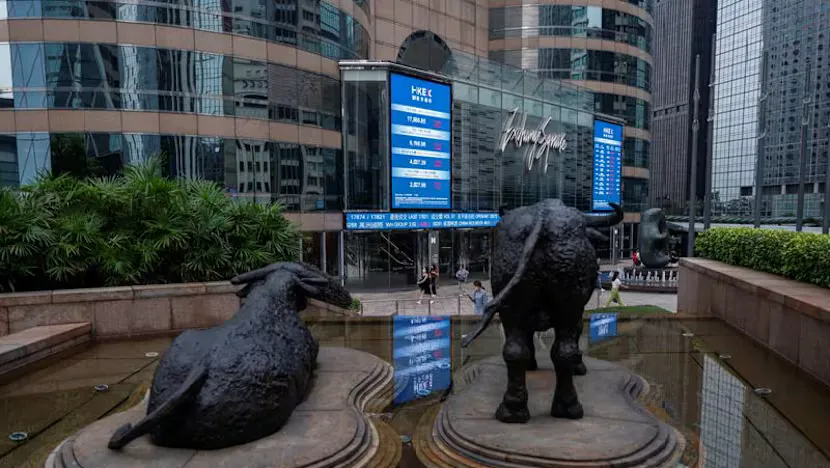
Asian equities declined on November 2 amid concerns over whether the artificial intelligence investment boom can be sustained. Japan's Nikkei dropped 0.5%, South Korean shares fell 0.8%, and MSCI's index tracking Asia-Pacific equities outside Japan slipped 0.4%.
Worries about negative cash flow and the scale of AI capital spending had driven up corporate default insurance costs the previous week. Attention was turning to earnings from Apple, AMD and Palantir following Intel's nearly 29% decline on Friday.
US futures moved higher, with contracts on the S&P 500 gaining 0.4% and Nasdaq futures advancing 0.6%. The Nasdaq had fallen almost 7% in October, its weakest monthly performance since April 2025. European futures were mixed: EUROSTOXX 50 contracts rose 0.1%, while DAX futures were unchanged.
Interest-rate futures indicated a 72% probability of a quarter-point Federal Reserve increase in December. Total tightening priced into the market stood at 55 basis points, down from more than 70 basis points a month earlier. The 10-year Treasury yield edged higher to 4.952%, while the 2-year yield was 4.612%.
Oil retreated after Iranian and Qatari officials held talks for a third consecutive day seeking an agreement to end the US-Israeli war on Iran. Brent futures fell 1.5% to $111.72 a barrel after gaining 13.6% in October. US crude futures declined 1.7% to $102.37 a barrel.
Gold recovered 0.6% to $3,898 an ounce following a 6.8% October loss. Currency trading was subdued, with the euro unchanged at $1.1156 and the dollar little changed at 157.62 yen.