Australia proposes internet safety fines at 5% of global revenue
The revised bill would also let Australians sue platforms over duty-of-care breaches and broaden the internet regulator’s removal powers.

The companies plan a commercial service for the first quarter of 2027, with employee rides set to begin soon.
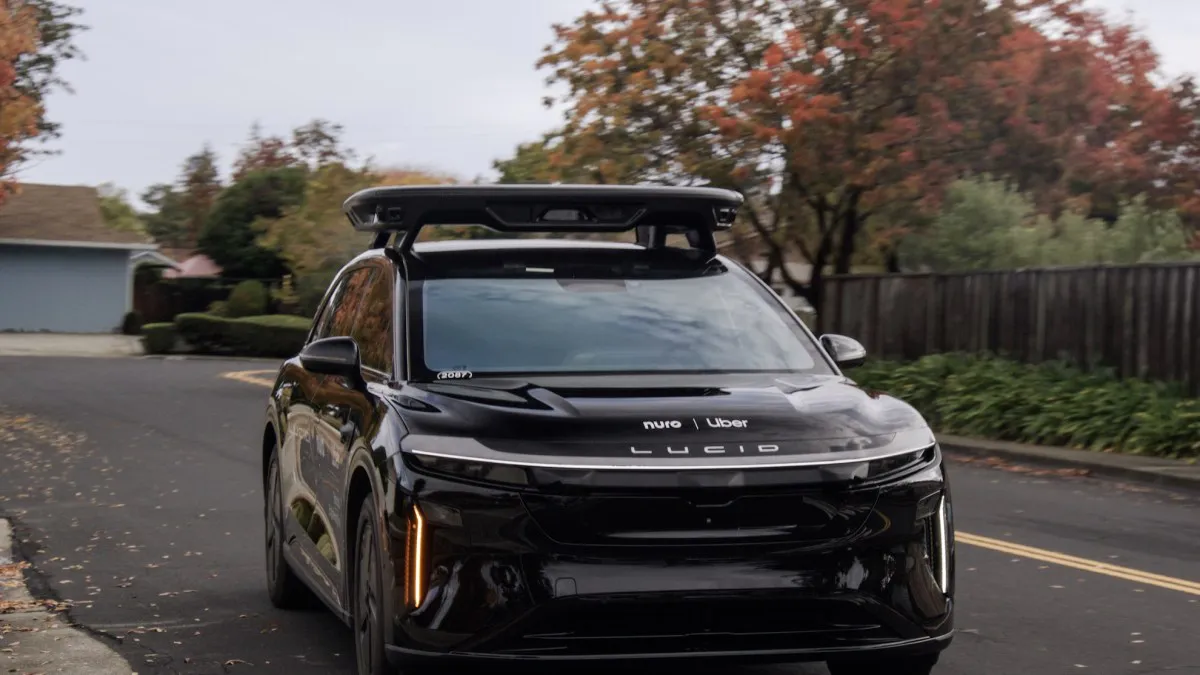
Lucid Gravity SUVs equipped with Nuro’s self-driving technology are now undergoing public-road trials without safety drivers around the San Francisco Bay Area. Uber and Nuro plan to start carrying employees soon, ahead of a commercial robotaxi service scheduled for the first quarter of 2027.
The move follows nearly a year of local road testing with a human operator present. Nuro obtained authorization for driverless trials from the California Department of Motor Vehicles in May 2026.
Uber’s commitment to invest in Lucid has grown to $500 million from an initial $300 million. Its agreement also includes purchasing at least 20,000 Gravity SUVs over the next six years. At its Arizona plant, Lucid is starting production of the robotaxis as the companies expand their engineering fleet.
The vehicle design debuted in January 2026 and combines high-resolution cameras with radar and solid-state lidar sensors. Fleet ownership and operation will fall to Uber, whose development work has centered on the cabin and passenger interactions with the vehicle.
Separate road trials in Houston continue with human safety operators. Nuro is also checking the autonomous-driving system through simulations and tests on closed courses before public service begins.