Nasdaq leads stock declines as dollar approaches weekly loss
European shares rose despite U.S. technology-sector weakness, while G7 government bonds were poised for their best week since late May.

The proposed reclassification could remove Indonesian shares from global indexes. The stock exchange said consultation remains open until April 30, 2027.
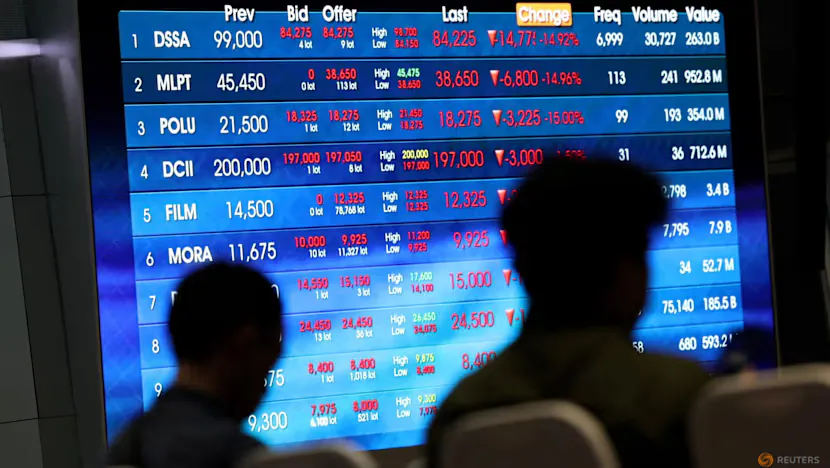
Indonesia's Jakarta Composite Index fell 11.1% on October 16 after MSCI proposed stripping the country of emerging-market status and placing it in its standalone category, raising concerns about foreign investment withdrawals.
An 8% drop at the opening triggered a trading halt. Losses deepened when trading restarted, leaving the index with its steepest decline since early 1998 and at a level last seen in 2020. It has lost more than 40% since the year began.
MSCI said efforts to resolve concerns over ownership transparency and trading practices had not advanced sufficiently. It had frozen Indonesia in its indexes in January and warned of a possible frontier-market downgrade, but now considers that classification inadequate to reflect the problems.
Standalone status would take Indonesian equities out of global indexes used by passive investment funds. UBS estimated that removal could prompt about $4 billion in passive withdrawals, with a further $15 billion potentially leaving through active investors.
The Indonesia Stock Exchange stressed that the proposal was not final and that comments would be accepted until April 30, 2027. The exchange said it had acted to improve market transparency and integrity, while CEO Jeffrey Hendrik said he would seek clarification.
Senior economic minister Airlangga Hartarto questioned why MSCI had not raised standalone status at a Bangkok meeting. He spoke before talks among senior Indonesian officials on the announcement.
The rupiah weakened 0.6% to 18,070 per US dollar, its weakest since late July. Central bank official Erwin Gunawan Hutapea said Bank Indonesia would act to maintain currency stability and orderly market functioning.