Dollar slips as bond yields fall and October Fed hike expectations cool
The euro gained 0.5% after touching an 18-month low, while U.S. Treasury yields reached roughly three-week lows.

Seoul briefly halted trading after the Kospi fell more than 8%, while chipmakers led losses across several Asian markets.
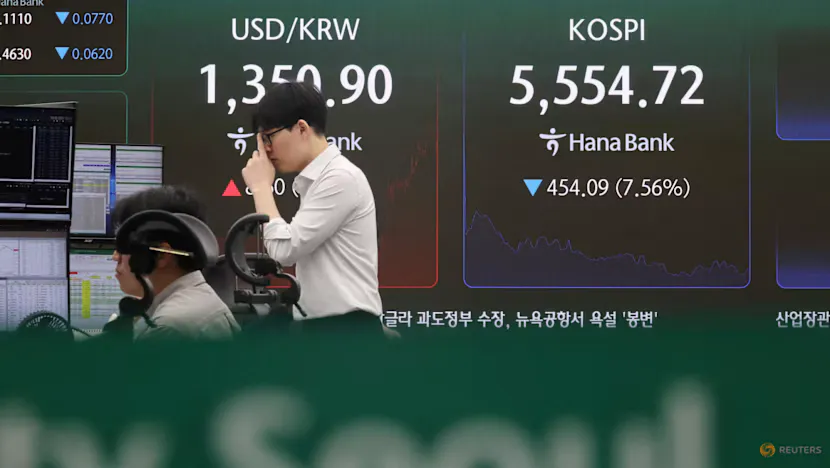
Asian equities fell on October 15, with South Korean and Japanese technology shares among the hardest hit, after stronger-than-forecast US inflation increased expectations for Federal Reserve interest rate increases. The regional decline followed losses on Wall Street.
Seoul's Kospi recovered some ground after a decline exceeding 8% triggered a temporary trading suspension. SK hynix fell more than 11% and Samsung lost more than 9%. Japan's Nikkei 225 dropped close to 5%, with Advantest down 15%, Kioxia losing more than 12% and SoftBank falling 9.3%.
Taipei declined more than 3%, while TSMC slipped 2%. Singapore's Straits Times Index ended 0.5% lower. Among Singapore-listed companies, AEM Holdings fell 10%, UMS Integration lost 9.7% and Frencken dropped 6.4%. Stocks also declined in Hong Kong, Shanghai, Sydney, Bangkok and Jakarta.
US consumer price inflation reached 3.7% in September, exceeding the 3.6% forecast and marking a five-month high. Energy costs were the main driver, with gasoline prices rising 9.1% during September and accounting for more than half the monthly CPI increase.
CME Group's FedWatch tool showed futures implied a 31.6% chance of a 25-basis-point increase at the Fed's next meeting on October 28, up from 22.1% a day earlier. Neil Wilson of Saxo Markets said the inflation figures complicated the outlook for a Fed pause and prompted markets to price in faster action.
The sell-off came amid concerns about technology valuations and the timing of returns on AI investment. All three major US stock indices had declined in the preceding session, led by a nearly 2% loss for the Nasdaq.