Dollar strengthens as traders raise bets on Fed tightening
The euro reached its weakest level against the dollar in more than 19 months, while futures traders increased the probability of a December rate rise to 96%.

Taiwanese shares gained 9.1% and South Korea's KOSPI rose 7.5%, while traders priced in a December Federal Reserve rate increase.
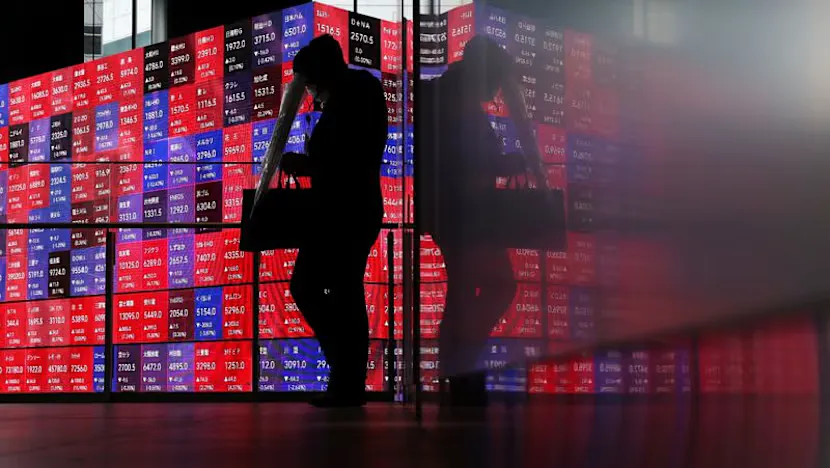
Asian equities advanced on November 24 after Jensen Huang's return as Nvidia CEO helped drive a U.S. technology rally. MSCI's broad Asia-Pacific index excluding Japan rose 4.6%, recovering from an eight-month low.
Taiwanese stocks gained 9.1%, South Korea's KOSPI climbed 7.5% and Japan's Nikkei rose 4.5% as trading resumed after a local holiday. Singapore's Straits Times Index advanced 1.4%.
In the preceding U.S. session, Nvidia shares jumped 31.5%, their largest daily percentage increase in 23 years, adding nearly $1 trillion to the company's value. The Nasdaq Composite gained 6.5%, while the S&P 500 rose 4.7%.
Kyle Rodda, senior financial market analyst at Capital.com, said Huang's return had reduced some uncertainty surrounding AI investments. He cautioned that concerns remained about slower AI spending, moderating earnings growth and U.S. interest-rate policy.
Fed funds futures fully priced in a December rate increase, compared with an 89% probability on Friday, according to CME Group's FedWatch tool. The 10-year U.S. Treasury yield reached 4.94%, while the two-year yield rose to 4.69%. The dollar traded close to its highest level against the euro in more than 19 months.
U.S. stock futures showed little follow-through early on November 24: S&P 500 futures were unchanged and Nasdaq futures slipped 0.2%. Brent crude futures were steady at $89.50 a barrel, while spot gold recovered 0.7% to $3,657.97 per ounce.