Stocks retreat as euro weakens and French bond risk premium rises
Brent crude remained near $100 per barrel amid Middle East tensions, while the benchmark U.S. Treasury yield climbed to 5.29%.

Japan's Nikkei fell 0.9% as Treasury yields remained near 24-year highs and oil prices rose.
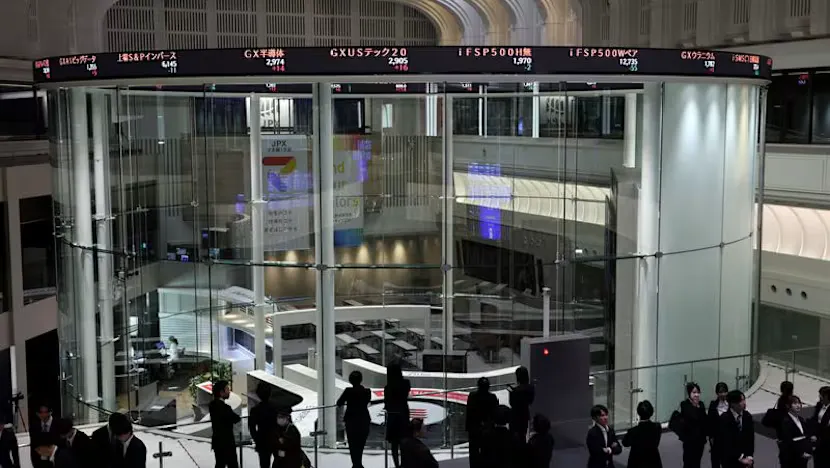
Asian stocks declined on October 8 as rising borrowing costs weighed on equities and reports of large technology-company financing plans added pressure to sovereign bond markets. Japan's Nikkei lost 0.9%, South Korean shares fell 0.6% and MSCI's broadest Asia-Pacific index excluding Japan slipped 0.1%.
Media reports said Broadcom was seeking $50 billion in financing, while SpaceX planned $30 billion of investment-grade debt and $10 billion in loans for purchases of Nvidia chips. Oracle was also reportedly seeking funds for AI chips. SpaceX credit default insurance reached record highs, while its shares and bonds declined.
The 10-year Treasury yield edged up to 5.298%, below the 24-year high of 5.326% reached overnight. A strong U.S. debt auction had helped yields retreat from that peak. The 2-year yield stood at 4.78%.
Federal Reserve meeting minutes showed most members viewed another interest-rate increase before year-end as likely, while remaining open-minded about individual meetings. Market pricing indicated a 19% probability of an increase in October and an 80% probability in December.
Concern about French public finances spread to Italian and Greek debt. The euro traded at $1.1198 after losing 0.6% overnight, while the dollar index rose to 102.22, close to an 18-month high.
Brent futures gained 0.9% to $101.14 per barrel, and U.S. crude futures rose 0.8% to $89.02 per barrel. Gold stood at $4,105 per ounce, near its lowest level in two months.